1. Introduction – The Governance Crisis in Modern Analytics
Enterprises today are experiencing an unprecedented growth in data. Digital transformation initiatives, customer engagement platforms, IoT, financial systems, and AI workloads generate massive volumes of structured and unstructured data every day. At the same time, regulatory pressure is intensifying across industries. Laws such as GDPR, HIPAA, PCI-DSS, ISO 27001, and regional data residency requirements impose strict rules on how organizations collect, process, store, and share information.
Traditional data governance models were designed for on-premises environments where data movement was slow, centralized, and tightly controlled. Cloud computing has completely changed this reality. Data is now highly distributed, consumed by multiple teams, accessed through self-service analytics tools, and integrated with external partners.
As a result, enterprises face a critical challenge:
How do we unlock business value from analytics while maintaining compliance, privacy, and trust?
The answer is a new model of compliant cloud analytics, where governance is not an afterthought but a foundational design principle.
This makes compliant cloud analytics on AWS a critical capability for enterprises building secure, privacy-first, and governed enterprise data analytics platforms.
2. What “Compliant Cloud Analytics” Really Means
Compliant cloud analytics is not simply about passing an audit. It is a holistic architectural approach built on five core pillars:
Data Privacy by Design
Sensitive information must be protected from the moment it enters the system. Encryption, masking, tokenization, and controlled access are mandatory, not optional.
Embedded Governance
Governance must be enforced automatically through policies, not manual approvals. Data access rules, ownership models, and lifecycle policies must be codified and enforced by the platform itself.
Security and Identity Control
Every request to data must be tied to an identity, evaluated against policies, logged, and monitored continuously.
Auditability and Traceability
Enterprises must be able to answer critical questions at any time:
- Who accessed which data?
- When was it accessed?
- For what purpose?
- Under which policy?
Responsible Data Sharing
Analytics frequently requires collaboration between departments, business units, and external partners. This must happen without exposing raw or sensitive data.
Together, these principles form the foundation of a compliant analytics platform.
3. Why AWS Is the Right Platform for Governed Analytics
AWS provides a uniquely comprehensive ecosystem for building compliant analytics platforms.
AWS enables enterprise data analytics on AWS by combining scalable AWS analytics services with built-in data governance, security, and regulatory compliance controls.
Core Analytics Stack
- Amazon S3 – Durable, scalable data lake storage
- AWS Glue – Data catalog, ETL, and schema management
- Amazon Athena – Serverless SQL analytics
- Amazon Redshift – Enterprise data warehousing
Governance and Security Layer
- AWS Lake Formation – Centralized data governance
- AWS IAM – Fine-grained identity and access control
- AWS KMS – Encryption key management
- AWS CloudTrail – Immutable audit logs
- AWS Config & Audit Manager – Continuous compliance monitoring
Privacy-Preserving Analytics
- AWS Clean Rooms – Secure multi-party data collaboration without sharing raw datasets
This tightly integrated toolchain allows enterprises to build governance directly into their analytics architecture rather than bolting it on later.
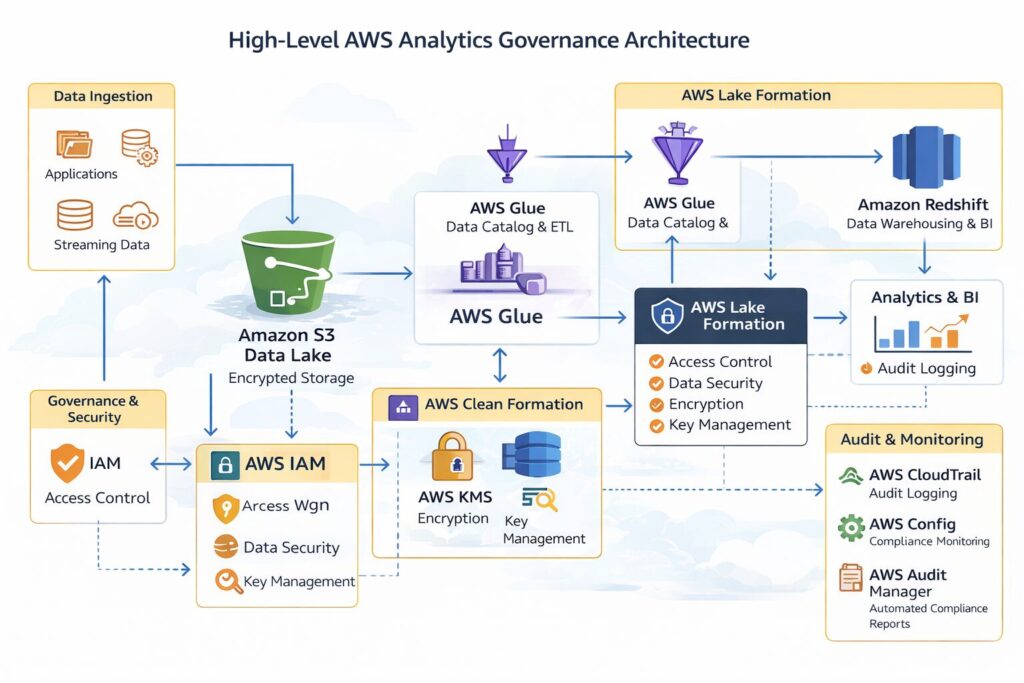
4. Reference Architecture: Compliant Analytics on AWS
End-to-End Data Flow
Data Sources → Amazon S3 (Encrypted Data Lake)
↓
AWS Glue (Catalog + ETL)
↓
Lake Formation Governance Layer
↓
Athena / Redshift (Analytics & BI)
↓
Privacy Sharing via AWS Clean Rooms
↓
Monitoring & Compliance Controls
(CloudTrail, Config, Audit Manager)
This reference architecture demonstrates how data governance on AWS can be consistently enforced across cloud data analytics workflows, from ingestion to insight.
Where Governance Happens
| Layer | Governance Responsibility |
| Data Ingestion | Data classification, encryption |
| Storage | Access policies, lifecycle control |
| Processing | Schema enforcement, permissions |
| Analytics | Role-based access, query auditing |
| Sharing | Privacy-preserving collaboration |
| Monitoring | Compliance reporting & alerts |
This architecture ensures that governance and compliance remain intact even as analytics scales.
5. Practical Enterprise Scenario: Regulated Financial Analytics Platform
Business Context
A financial services enterprise processes transaction data containing:
- Customer PII
- Financial records
- Risk models
- Regulatory reporting datasets
The organization needs:
- High-performance analytics
- Strict regulatory compliance
- Secure data sharing with partners
- Full audit visibility
6. Step-by-Step Implementation
Step 1 – Secure Data Ingestion
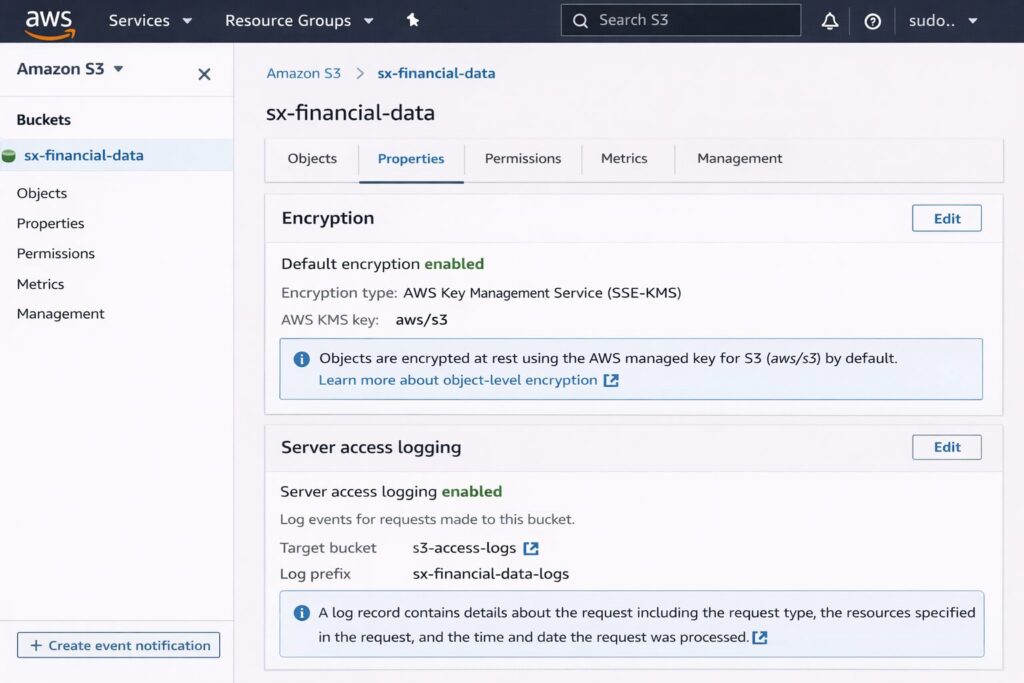
Raw financial data is ingested into Amazon S3.
All buckets are encrypted using AWS KMS.
Object-level logging is enabled.
Step 2 – Data Cataloging and Governance
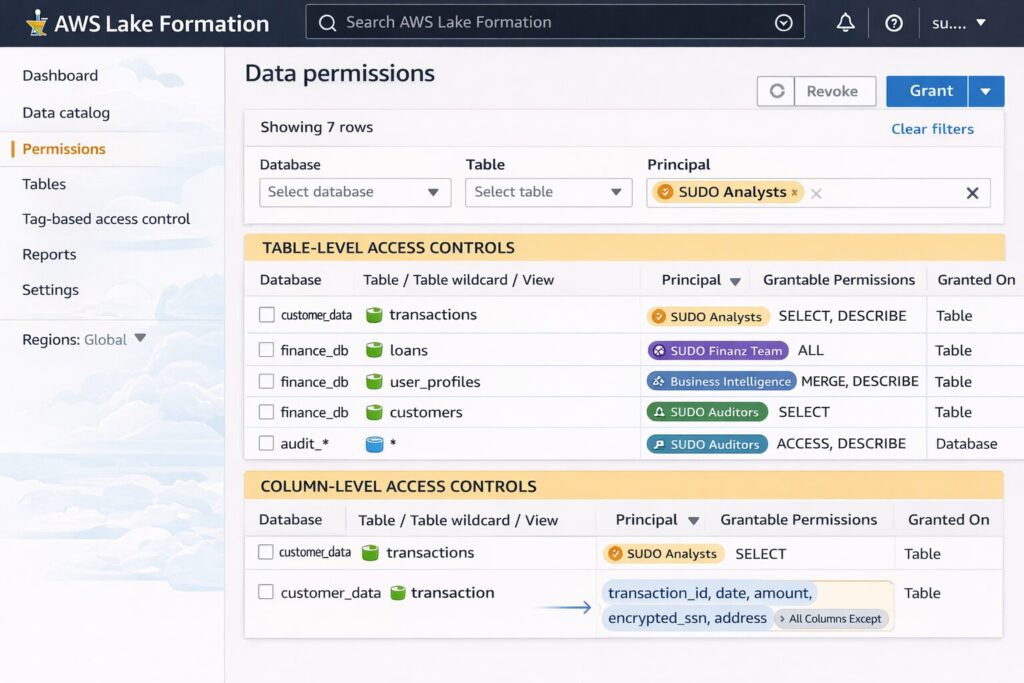
AWS Glue crawls the datasets and registers schemas in the Glue Data Catalog.
AWS Lake Formation applies centralized permissions:
- Which roles can read which tables
- Which columns contain sensitive data
- Which teams can query which datasets
AWS Lake Formation governance ensures fine-grained access control for analytics workloads while maintaining compliance across regulated enterprise environments.
Step 3 – Analytics Processing
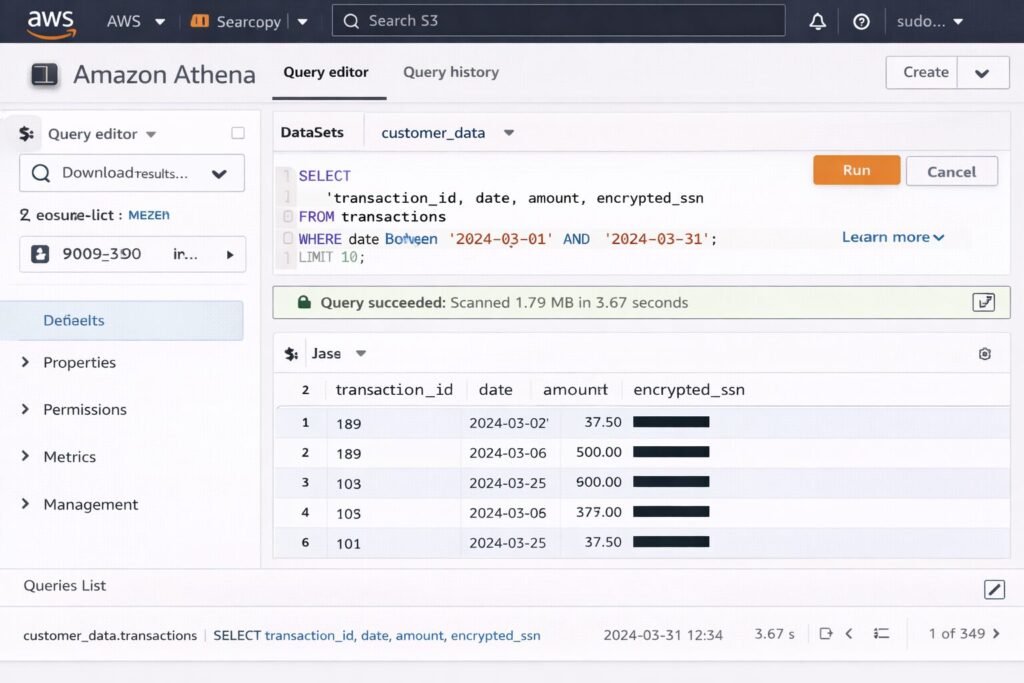
Business analysts query data using Amazon Athena.
Advanced analytics teams use Amazon Redshift for large-scale reporting.
Every query is automatically logged and audited.
Step 4 – Privacy-Preserving Data Collaboration
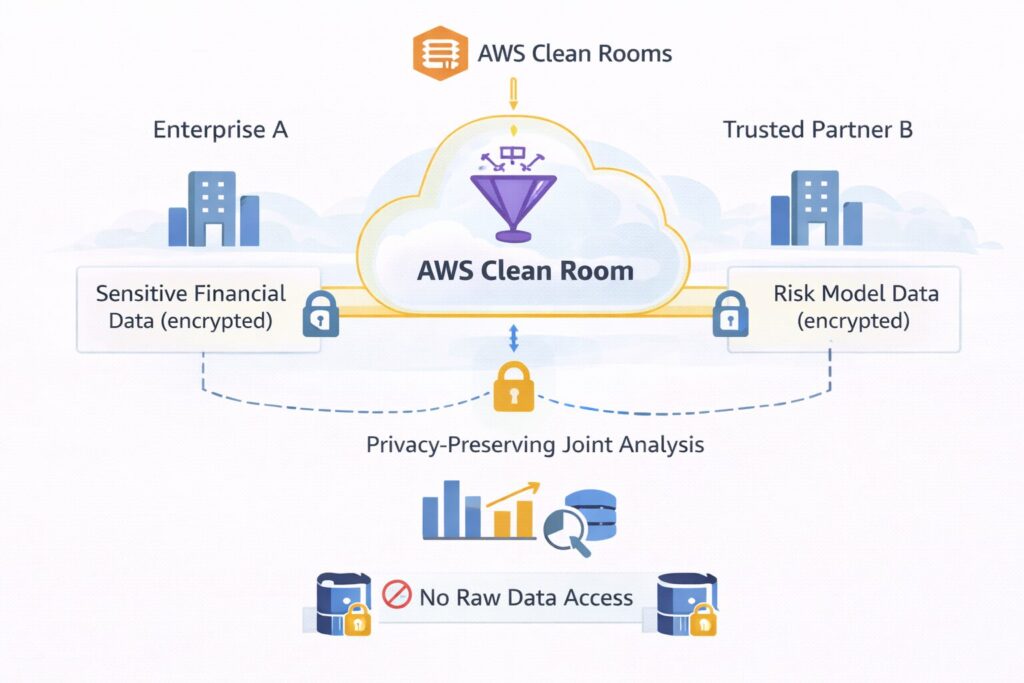
The enterprise collaborates with an external risk partner using AWS Clean Rooms.
Both parties analyze joint datasets without either side exposing raw customer information.
AWS Clean Rooms enables privacy-preserving analytics on AWS, allowing organizations to collaborate on sensitive datasets without exposing raw data.
Step 5 – Compliance Monitoring and Auditing
All activity is tracked via:
- CloudTrail – Who accessed what
- AWS Config – Whether configurations violate policies
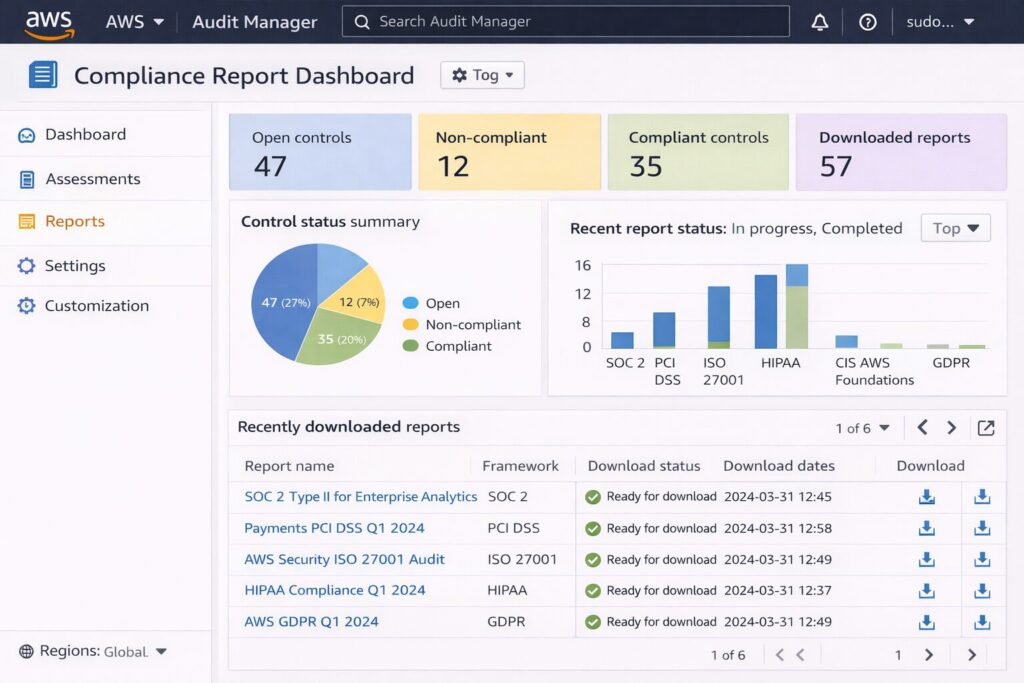
- Audit Manager – Automated compliance reports
7. Enterprise Design Principles
Automate Governance
Never rely on manual approvals. Encode policies into the platform.
Classify Data Early
Apply sensitivity labels at ingestion.
Use Least Privilege Everywhere
IAM roles should grant only the exact permissions required.
Encrypt Everything
At rest, in transit, and during processing.
Continuously Monitor
Compliance is not static. It must be verified constantly.
8. Business Outcomes
Enterprises implementing compliant analytics achieve:
- Regulatory confidence – Reduced audit risk
- Customer trust – Strong privacy guarantees
- Operational efficiency – Automated governance
- Faster insights – Secure self-service analytics
- Scalable growth – Compliance that scales with business
9. Why Enterprises Must Rethink Data Governance Now
The cost of non-compliance is rising rapidly. Fines, legal exposure, reputational damage, and loss of customer trust are existential risks. At the same time, competitive advantage increasingly depends on how effectively organizations leverage data.
Compliant cloud analytics is no longer optional. It is the foundation of sustainable, data-driven enterprises.
10. Conclusion
Modern enterprise cloud analytics on AWS without strong governance and compliance introduces significant operational and regulatory risk.
AWS enables organizations to innovate with confidence by embedding compliance, privacy, and security directly into the analytics lifecycle.
Enterprises that redesign their analytics platforms with compliance at the core will move faster, operate safer, and build stronger trust with customers and regulators alike.