

Introduction
In today’s cloud-driven environments, organizations must ensure that their applications and infrastructure remain resilient even when infrastructure conditions evolve across regions. A strong Disaster Recovery (DR) strategy ensures that systems can quickly transition to alternate environments while maintaining operational continuity.
Modern cloud platforms rely on a combination of automation, infrastructure snapshots, and environment replication to ensure rapid recovery capabilities.
At SUDO, one of the capabilities supporting this resilience strategy is SnapRelocate, an internal mechanism designed to accelerate infrastructure relocation using snapshot-based recovery techniques.
This approach enables engineering teams to recreate environments quickly and efficiently, ensuring that applications remain available and operational when infrastructure transitions are required.
Responding to Evolving Infrastructure Needs
In modern cloud environments, infrastructure operates across multiple regions to support scalability, performance, and availability. As organizations grow and workloads expand, the ability to move infrastructure across regions quickly becomes a key priority. This is the core idea behind Disaster Recovery.
Traditionally, relocating infrastructure across regions involves multiple manual steps, including provisioning resources, restoring data, and reconfiguring environments. These processes can be time-consuming and operationally complex, especially when a rapid transition is required.
To address these, organizations rely on automated mechanisms that simplify and accelerate infrastructure relocation. At SUDO, SnapRelocate fills that role. It uses snapshot-based workflows to recreate infrastructure in alternate regions quickly while keeping environments consistent and performant.
By enabling structured and efficient environment relocation, SnapRelocate supports seamless disaster recovery execution. This ensures that applications remain responsive and available during regional transitions.
This highlights the importance of having a well-defined and automated disaster recovery approach in place.
The Importance of Disaster Recovery in Modern Cloud Infrastructure
Cloud platforms today support large-scale distributed systems where applications depend on multiple interconnected components, such as:
- Compute infrastructure
- Storage volumes
- Networking configurations
- Application data and state
A well-designed disaster recovery strategy ensures that these components can be recreated quickly in alternate infrastructure locations, allowing systems to continue operating smoothly.
Instead of rebuilding entire environments manually, organizations increasingly rely on snapshot-based recovery mechanisms to restore infrastructure rapidly.
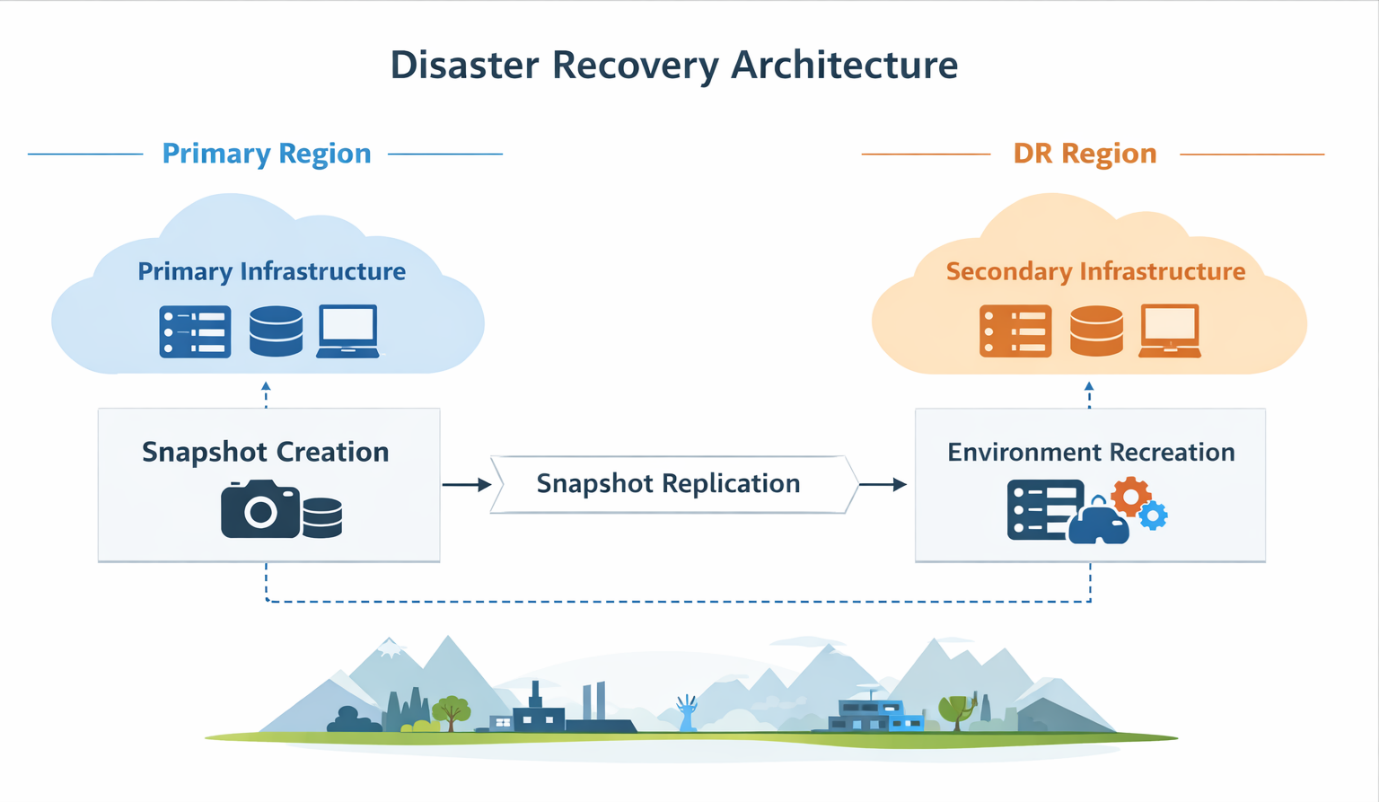
Challenges with Traditional Disaster Recovery Approaches
Traditional disaster recovery methods often involve multiple manual steps, including:
- Recreating compute resources
- Restoring storage volumes
- Reconfiguring networking
- Re-deploying applications
These processes can increase operational complexity and recovery time.
To address these challenges, modern cloud operations rely on automated snapshot-based infrastructure relocation, enabling faster recovery workflows.
Introducing SnapRelocate
To support real-time disaster recovery requirements in dynamic cloud environments, SUDO leverages SnapRelocate as a core capability for infrastructure relocation.
SnapRelocate is designed to automate and streamline the process of recreating environments across regions using snapshot-based workflows.
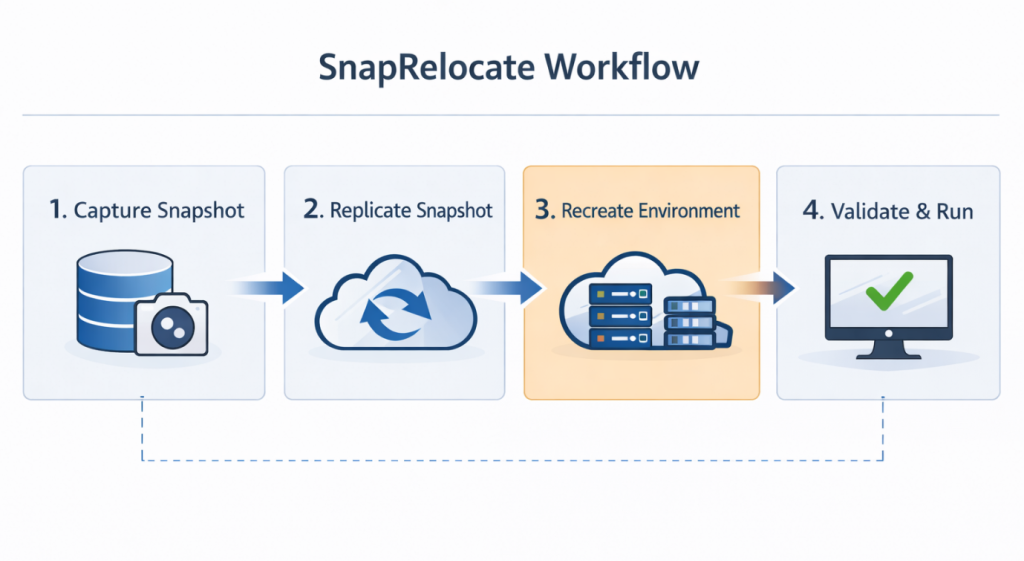
Instead of rebuilding infrastructure from the ground up, SnapRelocate enables teams to:
- Capture snapshots of infrastructure components
- Replicate those snapshots to alternate environments
- Recreate infrastructure quickly using the replicated data
- Validate that the recreated environment is operational
This automated approach significantly simplifies recovery operations while improving response time.
SnapRelocate Disaster Recovery Workflow
The SnapRelocate workflow typically follows a structured sequence of steps.
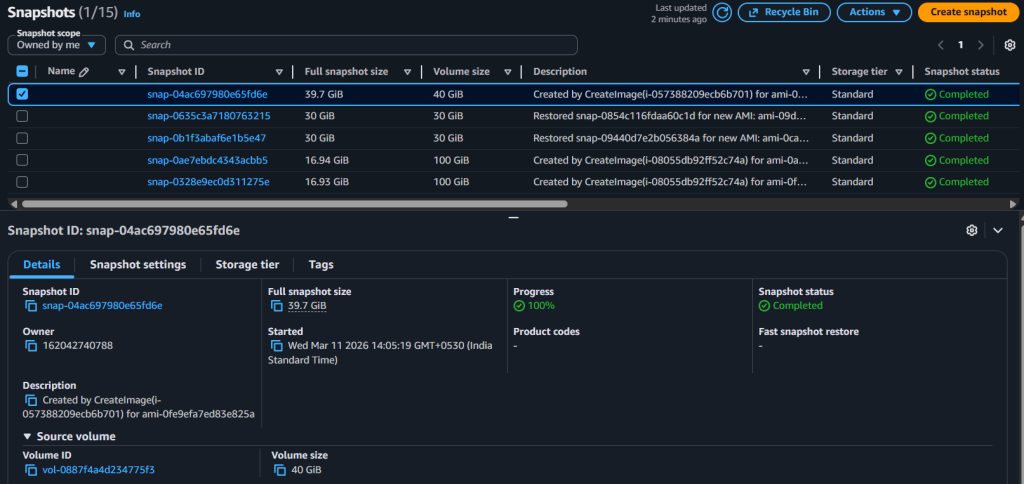
Step 1: Snapshot Capture
The first step in the process involves capturing infrastructure snapshots that preserve the current state of storage volumes and system data.
Snapshots provide a reliable backup of the environment that can later be used to recreate infrastructure.
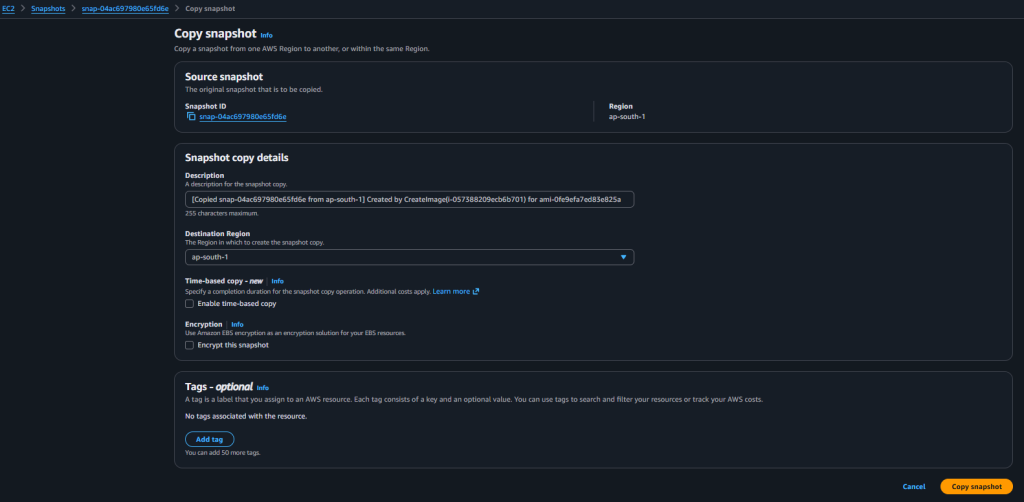
Step 2: Snapshot Replication
Once the snapshot is created, it can be replicated to another infrastructure location to ensure availability across environments. This replication ensures that recovery resources are accessible when needed.
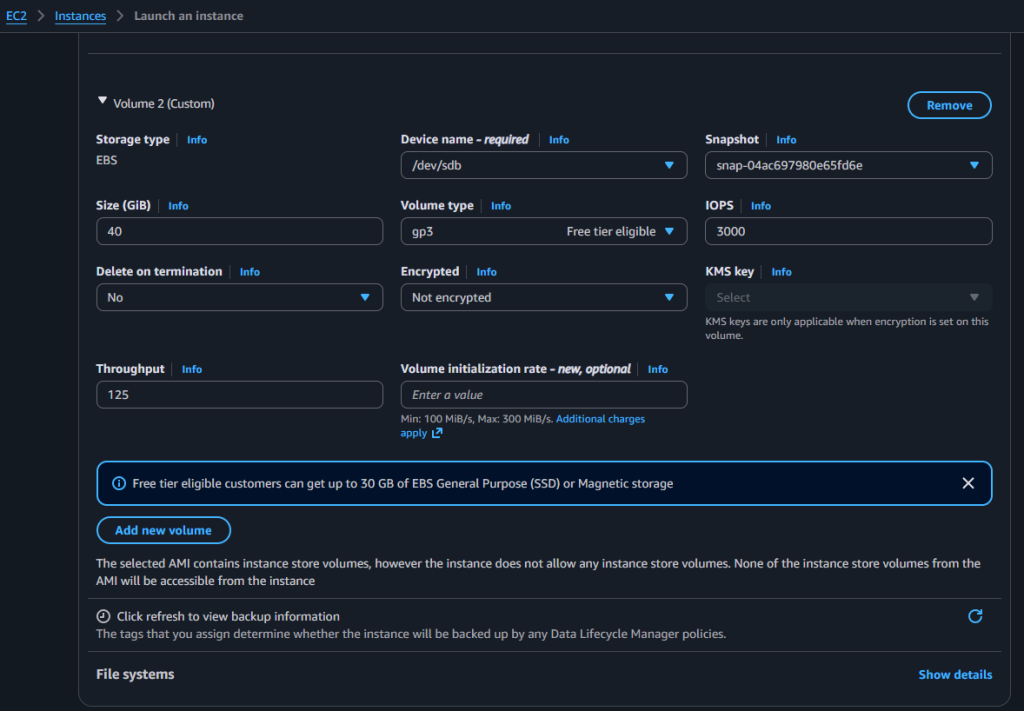
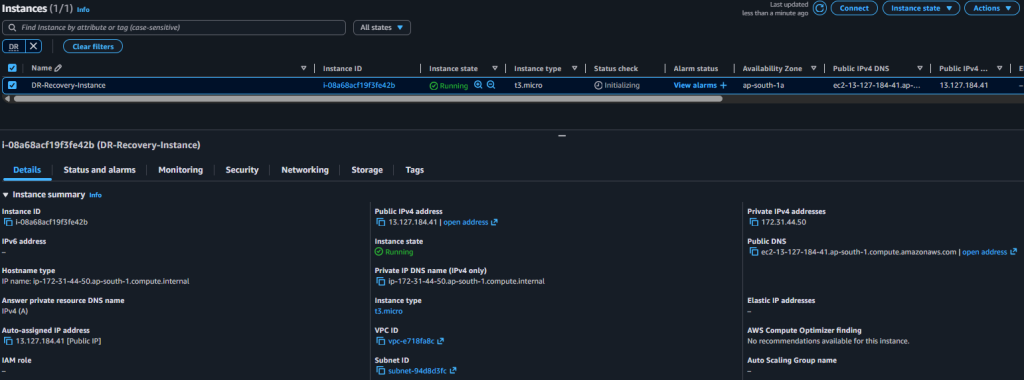
Step 3: Environmental Recreation
The replicated snapshot can then be used to recreate infrastructure in the target environment.
New instances and storage volumes are launched using the snapshot as the base.
Step 4: Environment Validation
After infrastructure has been recreated, system checks are performed to confirm that services are operational and ready to support workloads.
SnapRelocate Workflow Overview
The SnapRelocate workflow represents a structured disaster recovery pipeline that enables rapid infrastructure relocation across regions. By combining snapshot capture, replication, environment recreation, and validation, it ensures that systems can be restored efficiently and consistently.
Benefits of SnapRelocate for Disaster Recovery
SnapRelocate enhances disaster recovery capabilities in several ways.
Faster Infrastructure Recovery
Snapshots allow infrastructure to be recreated quickly without rebuilding environments manually.
Reduced Operational Complexity
Automation simplifies recovery workflows and reduces manual intervention.
Improved Recovery Time Objectives
By enabling faster infrastructure recreation, organizations can significantly improve their recovery timelines.
Scalable Infrastructure Management
The same snapshot-driven workflow can be applied to multiple environments, supporting large-scale cloud operations.
Strengthening Resilient Cloud Operations
As cloud platforms continue to scale, disaster recovery strategies must evolve from manual restoration processes to automated and snapshot-driven workflows.
Capabilities such as SnapRelocate demonstrate how infrastructure automation can strengthen operational readiness and improve system resilience.
By enabling environments to be recreated rapidly and efficiently, SnapRelocate supports SUDO’s broader strategy of maintaining reliable and resilient cloud infrastructure.
Conclusion
Disaster recovery plays a critical role in ensuring the reliability of modern digital platforms, especially in scenarios where infrastructure conditions require regional transitions.
By addressing real-world infrastructure challenges through automated snapshot-based relocation, SnapRelocate enables faster and more efficient recovery workflows, helping engineering teams restore environments quickly while maintaining operational continuity.
As organizations continue to build increasingly complex cloud systems, tools that simplify and accelerate recovery processes will remain essential components of resilient infrastructure strategies

Cloud Engineer with 14 AWS certifications, focused on scalable, reliable, and automated cloud solutions